Orangery extensions
An orangery extension has brick piers and a flat or lightly pitched roof with a central glazed lantern. It feels more like an extension than a conservatory, and it has a solid ceiling and walls that help it stay warm in winter and cool in summer.
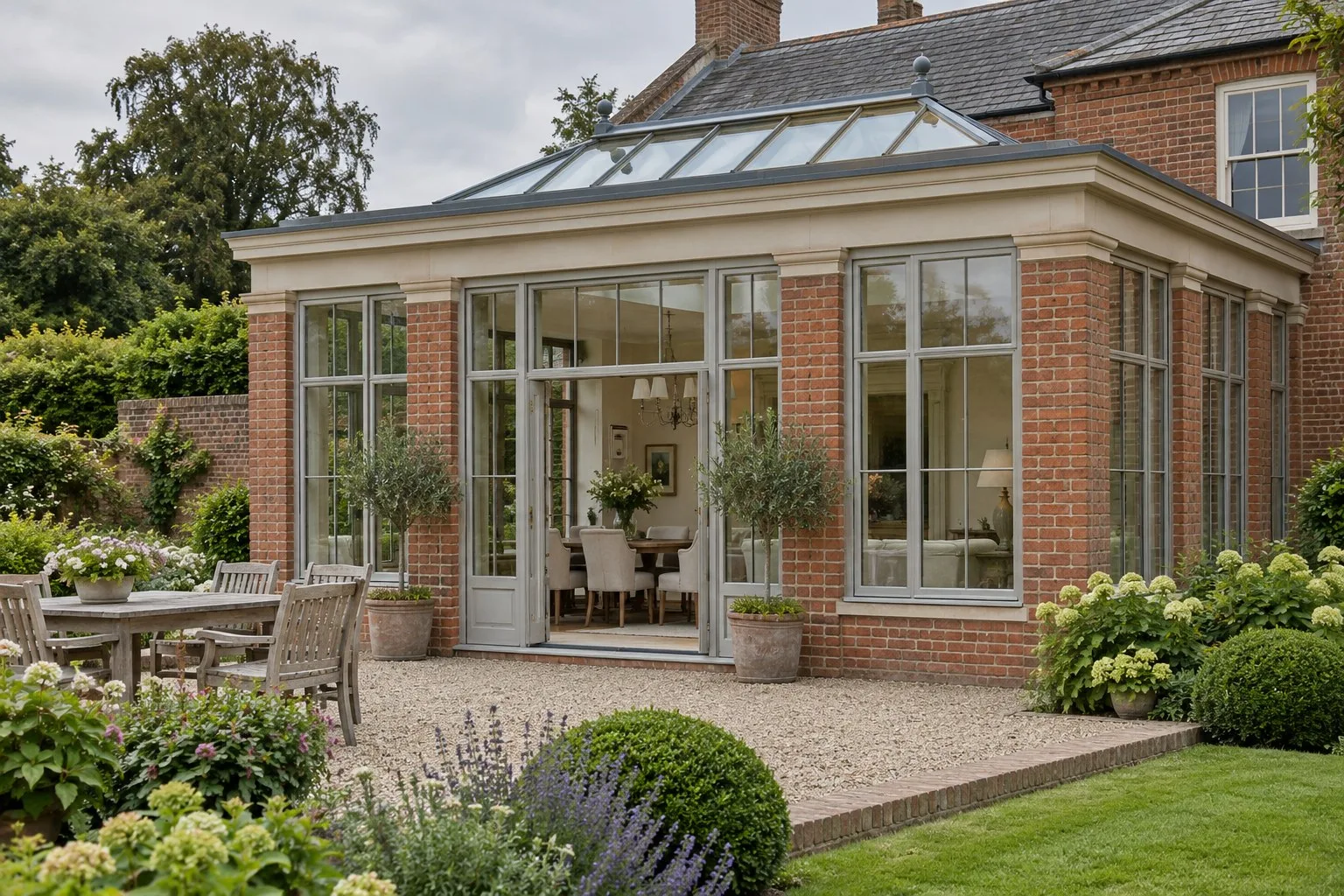
Who orangery extensions suit
Suits
- Anyone who wants a room that feels like part of the house
- Period and higher-value homes
- A room used all year round, such as a kitchen or dining room
Good points
- Brick and a solid roof make it warmer than a conservatory
- Looks like part of the house, not an add-on
- Plenty of light from the lantern and the large windows
Watch out for
- Costs well over a conservatory of the same size
- Takes longer to build, and is more likely to need planning permission
- Needs a deeper base and more building work
What orangery extensions cost
Orangery extensions typically cost £32,500 (4m × 3m orangery, fully installed), with most jobs between £25,000 and £40,000. That includes VAT at 20%. Fitting takes 30–60 days on site.
What you would actually pay
Typical 4m × 3m orangery, fully installed · UK- Typical installed cost Orangery extensions, supplied and fitted
- £27,083
- VAT at 20% Standard rate
- £5,417
- Net cost to you
- £32,500
If you borrowed £32,500.00 over 36 months at 0.0%, it would cost £902.78 a month – £32,500.00 in total, of which £0.00 is interest. The last payment would be £902.70.
Illustration only – not a quote, not an offer of credit, and not financial advice. Rates depend on your circumstances and creditworthiness.
Where the money goes on orangery extensions
| Element | Typical range |
|---|---|
| Brickwork and pillars The brick piers and base walls that give an orangery its solid lower half. Labour included. | £4,000 – £8,000 |
| Glazing and frames Double glazed frames and doors in the material you choose. Labour included. | £6,000 – £12,000 |
| Lantern roof The glazed roof lantern that brings light into the middle of the room. | £3,000 – £6,000 |
| Foundations A deeper base than a conservatory needs, because of the weight of the brickwork. | £2,000 – £4,000 |
| Internal plastering and finishing Plastering the internal walls and ceiling and finishing them for decoration. | £2,000 – £4,000 |
| Electrics, flooring and building control Lighting, sockets, flooring and the Building Regulations application and inspections. | £2,300 – £5,000 |
Guide prices including VAT. Your actual cost depends on your home, access and specification.
What moves the price of orangery extensions
- Size
Floor area drives the cost more than any other single choice. The price per square metre falls as the orangery grows.
- Frame material
uPVC is the cheapest. Aluminium and hardwood cost more, and hardwood costs the most.
- Brickwork and finish
Matching the brick to the house, and the level of internal finish, move the price a great deal.
- The lantern
A larger or more detailed lantern adds to the roof cost. Some installers offer a flat roof with rooflights as a cheaper alternative.
- Where you live
London and the South East are dearer than the North of England, Wales and Scotland.
What a quote for orangery extensions should include
If a quote is missing any of these, ask why before you compare it with another.
- The footprint, the style and the roof type, with a drawing that shows the layout
- The frame material and colour, inside and out, and the guarantee on frames, glass and the roof
- The base and groundworks: what is included, and what happens if the ground is poor
- Whether a dwarf wall is in brick or in the frame, and who builds it
- Whether the lantern, ceiling and internal finish are in the price
- Building Regulations and planning, and who applies for them
- The guarantee on the frames, the roof and the brickwork
Orangery extensions prices by region
Labour is most of the difference. Typical price (4m × 3m orangery, fully installed), including VAT.
| Region | Typical | vs UK average |
|---|---|---|
| London | £40,500 | +25% |
| South East | £38,000 | +17% |
| South West | £36,000 | +10% |
| East of England | £34,500 | +6% |
| West Midlands | £34,000 | +4% |
| Scotland | £33,000 | +2% |
| East Midlands | £32,500 | UK average |
| Yorkshire and the Humber | £32,500 | UK average |
| North West | £32,000 | −2% |
| North East | £31,000 | −5% |
| Wales | £30,500 | −6% |
| Northern Ireland | £28,500 | −12% |
Common questions about orangery extensions
What is the difference between an orangery and a conservatory?
An orangery has brick piers and a solid roof with a glazed lantern. A conservatory is mostly glass, with a glazed roof. The orangery is warmer and feels more like part of the house.
Does an orangery need planning permission?
Often, because it is larger and more solid than a conservatory. A solid roof and a bigger footprint can take it outside permitted development.
Are orangeries worth the extra cost?
If you want a room you can use in every season, yes. For a garden room used mostly in summer, a conservatory costs far less.
Where these orangery extensions prices come from
Guide prices are compiled from published UK price guides, converted to a price before VAT, and shown here with VAT added. They are indicative, not quotations. How we price explains the method.
- Less.co.uk, orangery cost, updated 27 October 2026 (VAT treatment not stated; treated as including VAT and divided by 1.2)
- BestBuilders, conservatory cost by size and type, updated 7 September 2026 (prices include VAT; divided by 1.2 to store ex-VAT)
- MyJobQuote, conservatory cost, updated 9 September 2026 (VAT treatment of the build prices is not stated; treated as including VAT and divided by 1.2)
Get quotes for your home
A guide price only takes you so far. Local firms can price the work on your own home, and comparing a few quotes is the quickest way to see what is reasonable.
Compare free quotes