Energy efficient conservatories
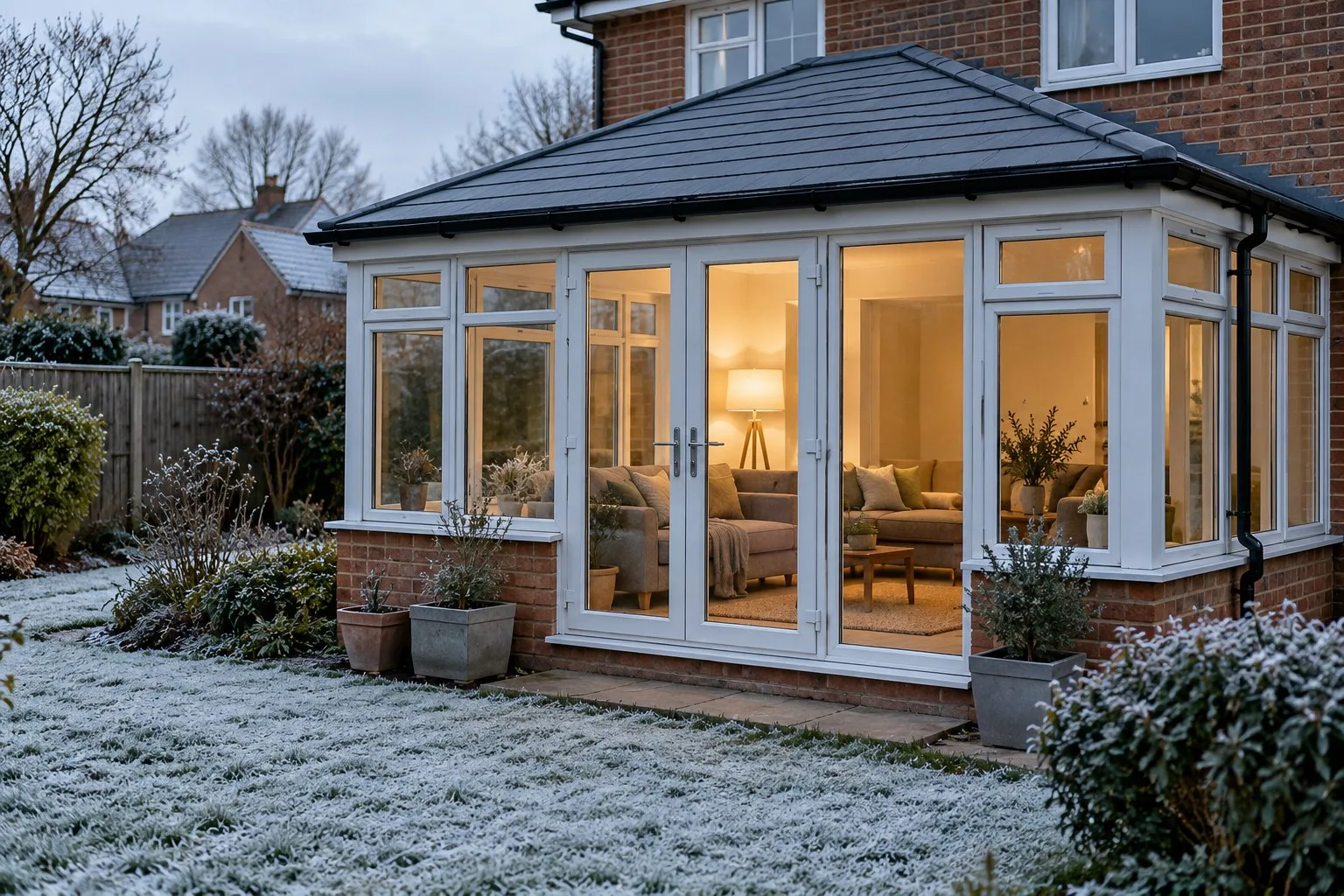
An energy efficient conservatory is one that stays comfortable without heavy heating or cooling, and the roof decides more of that than anything else. A glazed roof loses heat in winter and gains it in summer, so swapping polycarbonate for a solid or well-insulated glass roof does more than any other upgrade. Glass, frame, floor and doors come next.
Why an energy efficient conservatory is hard to achieve
A conservatory is mostly glass, and glass lets heat through in both directions. In winter the warmth you put in leaves through the roof and walls. In summer the sun heats the room faster than it can lose it. Because the roof sits above the room and receives the most sunlight, it accounts for most of both problems.
Orientation changes the balance. A south or west-facing room overheats first. A north-facing one stays cold. So the right roof for one garden can be the wrong one for another.
The roof in an energy efficient conservatory
The three common roofs behave very differently.
- Polycarbonate. The cheapest roof, typically £4,100 to replace. It is light and easy to fit, but it insulates poorly and is noisy in the rain. See polycarbonate conservatory roofs.
- Glass. Typically £6,000 to replace. Modern double glazed units with a solar control coating cut glare and overheating, and they keep more heat in than polycarbonate. See glass conservatory roofs.
- Solid or tiled. Typically £10,000 to replace. An insulated roof behaves like the roof of the house, so the room stays warmer in winter and cooler in summer. It costs the most and needs a frame that can carry the weight. See solid and tiled conservatory roofs.
A heavier roof can bring Building Regulations into play. The Planning Portal says a new roof must comply so that it is structurally safe, energy efficient and properly ventilated. So a solid roof is a job to check with building control first.
Glass and glazing
The glass in the walls matters too, though less than the roof. Look for sealed double glazed units with a low-emissivity coating, a warm edge spacer and an inert gas fill. Solar control glass cuts the heat that gets in, which helps in a south-facing room. Our guide to conservatory U-values explains how to read the numbers a supplier quotes.
The frame and the base
A frame with proper thermal breaks leaks less heat than one without. uPVC conservatories insulate well as standard. Aluminium conservatories can match them if the frame has a thermal break, so check the specification. The dwarf wall and the floor matter as well, because a poorly insulated slab drains warmth through the bottom of the room.
Separating an energy efficient conservatory from the house
In England, a conservatory is normally exempt from Building Regulations if external-quality walls, doors or windows separate it from the house. It also needs its own independent heating with separate controls. That separation is also the best thing you can do for your energy bills. If you leave the doors open and heat the conservatory from the house, you heat all that glass with the boiler. Keep the doors shut in winter and the conservatory acts as a buffer. The Planning Portal’s guidance sets out the conditions.
Floors, walls and draughts
The floor and the dwarf wall are easy to overlook. A bare concrete slab with no insulation under it pulls heat out of the room all winter. A thin dwarf wall does the same. Insulation under the floor and in the wall costs little at the build stage and a good deal more to fix later. Ask for both in the specification. Draughts matter as well. A door that doesn’t close tightly, or a gap round the frame, lets warm air out and cold air in. Fixing them costs far less than any new glazing.
Orientation and shading
Where the conservatory faces changes what it needs. A south or west-facing room gets the most sun, so it benefits from solar control glass, roof blinds and good ventilation. A north-facing room gets little direct sun and loses heat quickly, so it benefits from a better roof and more insulation. A tree, fence or roof overhang that shades the room in summer helps. It only works if it doesn’t cut the winter light you want. Our guide to conservatory blinds explains the options for shade.
Upgrade an old conservatory or build new
If the frame and base are sound, making an old conservatory energy efficient is almost always cheaper than building a new one. A new roof, better glass in the doors and some insulation under the floor can change the room completely. If the frame is failing, the base has settled or the room is badly planned, a new build may be the better use of money. A replacement conservatory roof is the usual first step, and an installer can tell you whether the frame will carry it.
Heating, blinds and ventilation
- Heating. Underfloor heating and electric panel heaters suit a room that you use occasionally. In a room you use every day, a well-insulated roof saves more than a bigger heater costs.
- Blinds. Roof blinds cut summer heat and winter heat loss, and they cost far less than a new roof. See our guide to conservatory blinds.
- Ventilation. Roof vents and trickle vents let moisture out, which matters more in a better-insulated room. See conservatory condensation.
Which energy efficient conservatory upgrade first
Start with the roof, because it makes the largest difference. If you only use the room in summer, though, good blinds and ventilation may be all you need. If the budget will not stretch to a new one, fit roof blinds and a thermal curtain on the doors, then look at the glass. If the frame is sound, replacing the roof is far cheaper than replacing the whole conservatory, and you keep the structure. When you are ready, compare quotes from installers, and check each one specifies the roof system, the glass and the guarantee. Our conservatory prices page shows what each option costs.
Get quotes for your home
A guide price only takes you so far. Local firms can price the work on your own home, and comparing a few quotes is the quickest way to see what is reasonable.
Compare free quotes