Guides
Conservatory condensation
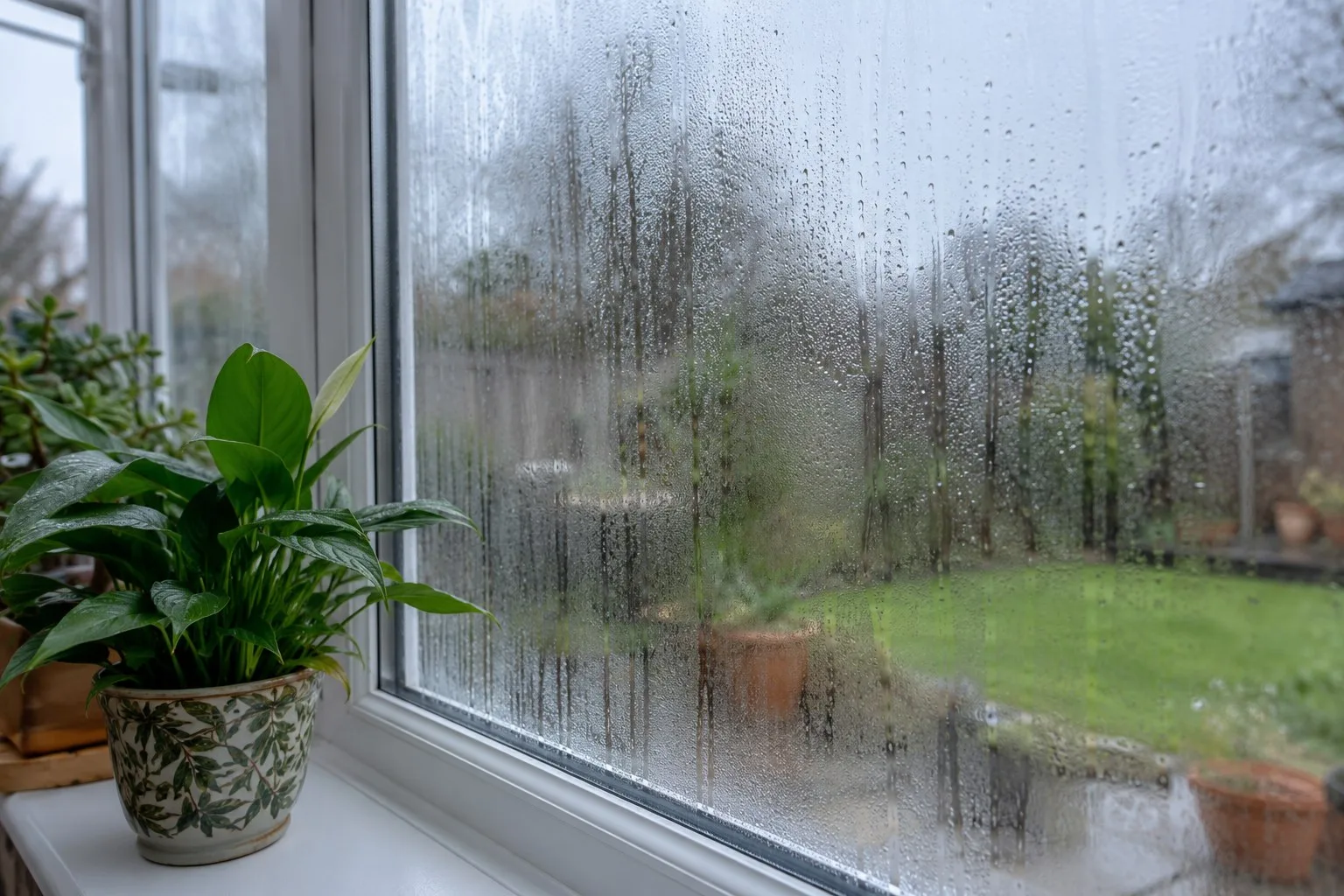
Conservatory condensation forms when warm, damp air meets glass that is colder than the air. A conservatory has a lot of glass and little insulation, so the surfaces cool quickly and moisture condenses on them. You cut it by lowering the moisture in the air, keeping the surfaces warmer and letting damp air out. Which of those matters most depends on how you use the room.
Why conservatory condensation forms
Glass is a poor insulator, and polycarbonate is poorer still. On a cold night the roof and windows drop well below the temperature of the room, and any moist air that touches them leaves water behind. The moisture comes from you, from plants, from drying washing and from any unflued heater. Conservatory condensation is worst in a room that is shut up and unheated, because the damp has nowhere to go.
Conservatory condensation or a failed seal
Condensation on the inside surface of the glass wipes away. If the misting sits between the panes of a double glazed unit and will not wipe off, the seal has failed and the unit needs replacing. A polycarbonate roof can also mist inside its own cells if the end seals have failed. In either case a cleaner will not fix it. Ask an installer or glazier about a replacement unit, or a replacement conservatory roof if the whole roof has gone.
How to reduce conservatory condensation
- Ventilate. Open roof vents and windows for a while each day, even in winter. Trickle vents help where they can be fitted. A room with no ventilation will always get damp.
- Keep it warm. A little background heat keeps the glass above the dew point. Constant low heat is better than short blasts.
- Cut the moisture. Don’t dry washing in the room, water plants rather than soaking them, and avoid unflued gas or paraffin heaters.
- Run a dehumidifier if the room stays damp, or for the worst months.
- Close the doors to the house. Warm, damp air from the kitchen and bathroom drifts into a cold conservatory. Keeping the doors shut stops the house feeding it.
Fix the glazing, not just the air
If condensation is heavy and constant, the glazing is the problem. A better roof raises the temperature of the inside surface, so less water condenses on it. A glass roof with a low-emissivity coating performs better than polycarbonate, and a solid or tiled roof all but ends the problem on the ceiling. Our guide to an energy efficient conservatory explains the trade-offs, and conservatory U-values explains how to compare glazing.
Roof blinds and thermal liners
A roof blind with an insulating layer keeps the glass warmer at night, which helps. See our guide to conservatory blinds. Blinds don’t replace ventilation.
When it points to something worse
Water running down the inside of the frame, stained plaster or black mould on the walls can mean a leak, not condensation. The government’s guidance on damp and mould makes the same point: wiping off surface mould won’t stop it coming back unless you find the cause. Check the roof, the gutters and the seals around the frame. If you find one, a roofer or installer can repair it. Get free quotes for a roof or glazing repair, and compare them like for like.
Get quotes for your home
A guide price only takes you so far. Local firms can price the work on your own home, and comparing a few quotes is the quickest way to see what is reasonable.
Compare free quotes