Guides
Conservatory security
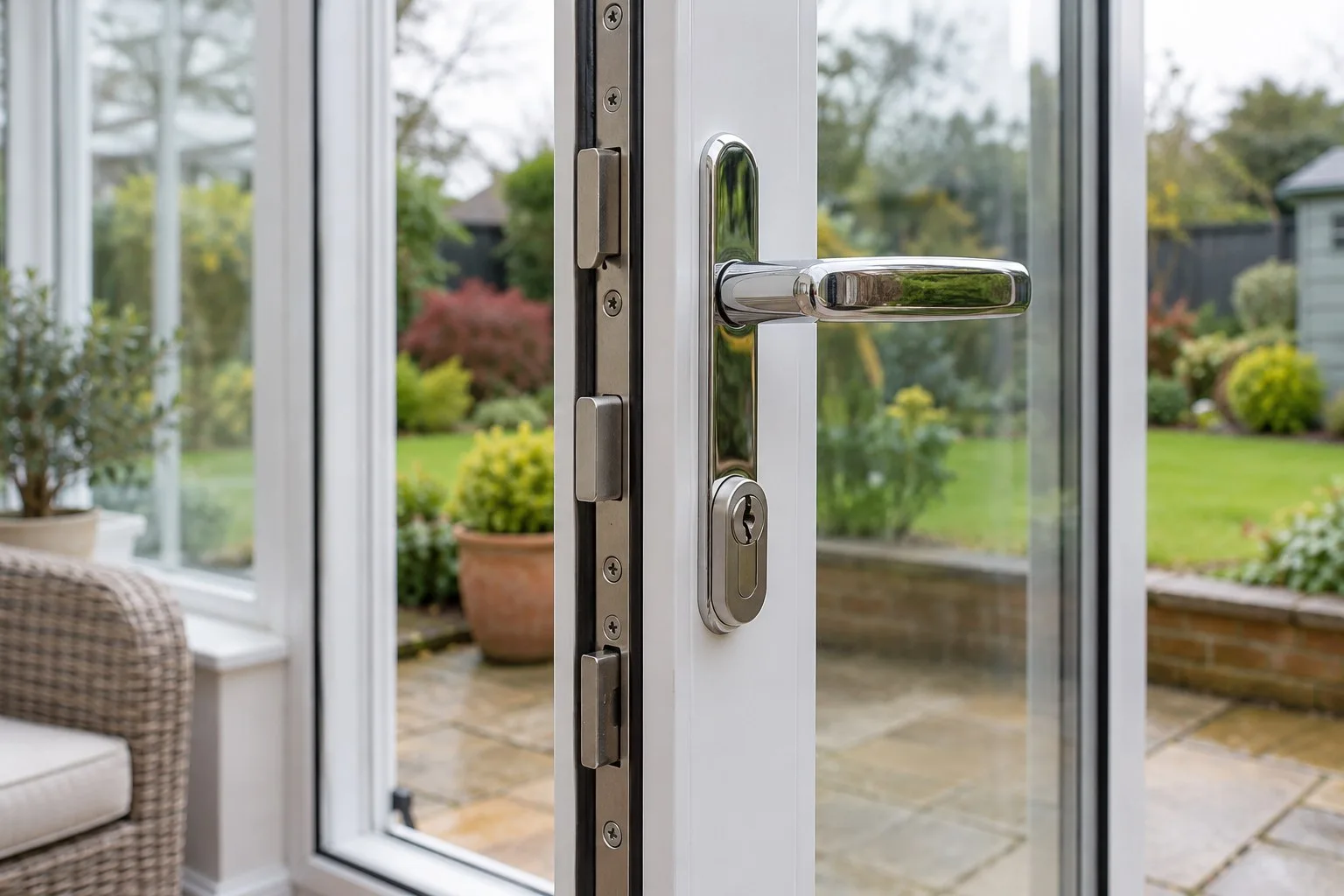
Conservatory security matters because a conservatory is a glazed room at the back of the house. A burglar can reach it without being seen from the street. The doors and locks matter most, along with the door between the conservatory and the house, because together they stop a break-in reaching the rest of the home. Most conservatory security improvements cost little and take a day.
The weak points in conservatory security
A burglar looks for three things in a conservatory. One is a door with a weak lock. Another is glass that can be removed or broken quietly. The third is a door into the house that has been left open or lightly secured. Roof panels are rarely a way in, but a roof a burglar can climb onto is an easy route to an upstairs window.
Doors and locks for conservatory security
- Multipoint locks. A modern multipoint lock shoots bolts into the frame at several points. Check that the doors you have, or the doors in a new conservatory, have one. See our guides to French doors and patio doors.
- Cylinders. A burglar can snap or bump a cheap euro cylinder. Ask for a cylinder with a recognised anti-snap and anti-bump rating.
- Hinges and frames. On French doors, check that nobody can lever the hinge side off. The frame should be fixed well to the wall.
- Sliding doors. Anti-lift devices keep the door on its track.
Glass and conservatory security
Safety glass in doors and low panels matters for injury, and it also resists impact better than ordinary glass. Where the glass sits low, near a door or beside it, Building Regulations ask for safety glass. In a door, that means glass up to 1,500mm from the floor. In a window, it means glass up to 800mm. Side panels need it within 300mm of a door’s edge. Laminated glass is harder to break through than toughened glass. Ask about it for doors that face an alley or a side passage.
The door between the conservatory and the house
In England, an exempt conservatory needs external-quality walls, doors or windows between it and the house. So the door into the house should be as strong as an outside door, and it should have a lock. Lock it at night and when you go out. Getting into the conservatory shouldn’t give a burglar the run of the house.
Alarms, lighting and habits that help conservatory security
- Lighting. A security light on the outside wall puts a burglar on show.
- Alarm sensors. A sensor in the conservatory, or on the door to the house, gives an early warning.
- Blinds. Closing blinds at night stops anyone seeing what is inside.
- Valuables. Don’t leave laptops or keys in view of the glass.
Check with your insurer, too, because some policies ask for particular locks on external doors and a claim can fail if they are missing.
What to do first
Check the doors and the locks, because that is where most break-ins start. If a door is old or poorly fitted, replacing it is the biggest single improvement. Ask every installer about locks, cylinders and glass. Our quote checker helps you line the specifications up. Our guide to choosing a conservatory installer has the other questions to ask.
Get quotes for your home
A guide price only takes you so far. Local firms can price the work on your own home, and comparing a few quotes is the quickest way to see what is reasonable.
Compare free quotes