Planning and building
Conservatory planning permission in Scotland
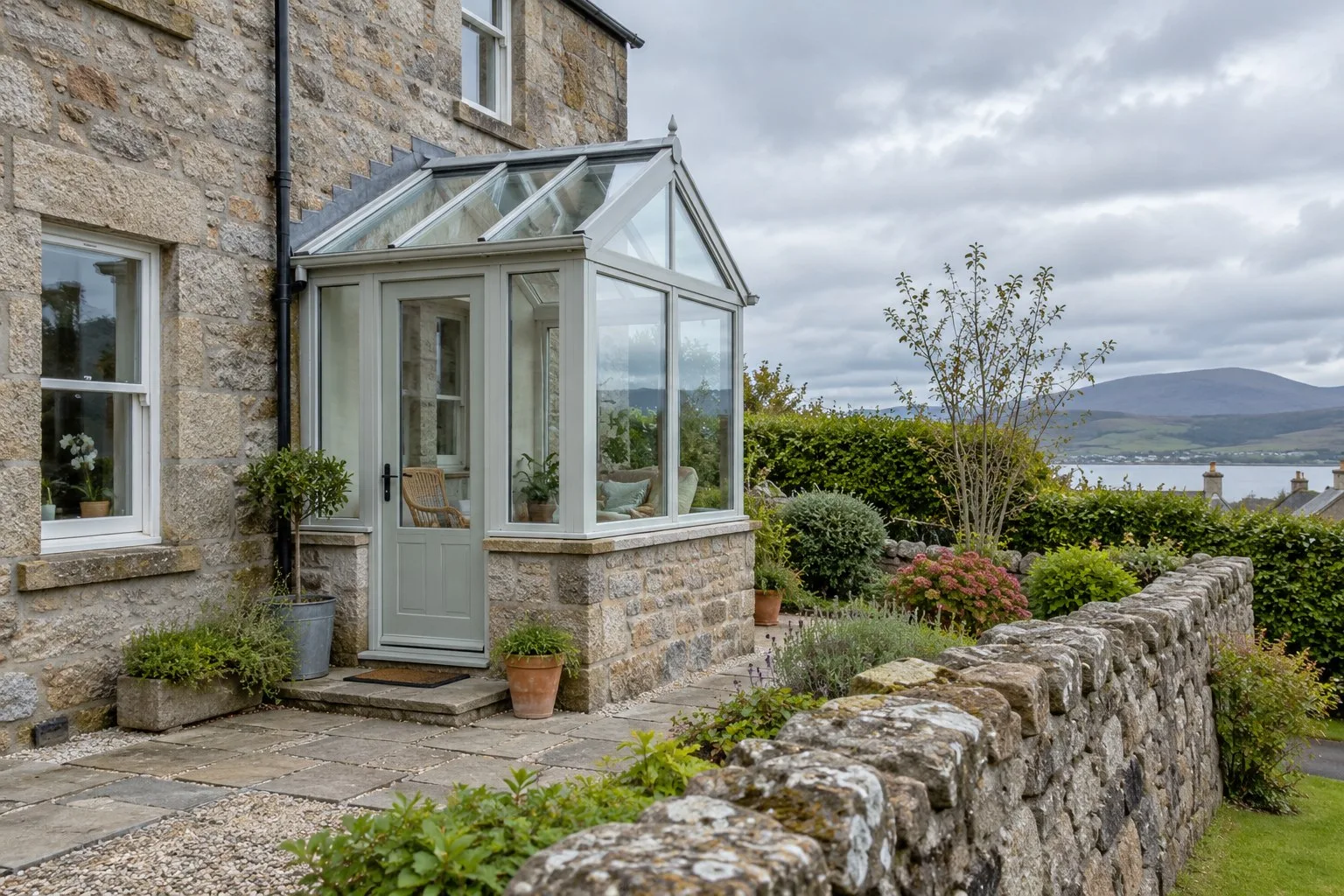
Conservatory planning permission in Scotland follows the Scottish permitted development rules, not England’s. A second approval sits beside it: the building warrant. Many conservatories need no planning application if they stay inside set limits. Almost every one still needs a building warrant, unless it is small and meets the exemption conditions. Your council’s planning and building standards teams decide both, so ask them before you order.
Planning permission for a conservatory in Scotland
Scotland’s permitted development rules for houses cover a single-storey ground floor extension, which is where a conservatory sits. The rule is Class 1A of the Scottish permitted development order. The Scottish Government’s householder guidance explains how councils apply it. Check the current text with your council, because the order has changed since it was first made.
Under Class 1A, an extension is not permitted development if:
- any part sits forward of the principal elevation, or forward of a side elevation that faces a road;
- any part is within 1 metre of the boundary and projects more than 3 metres beyond the nearest rear wall of a terraced house, or more than 4 metres for any other house;
- the eaves are higher than 3 metres;
- any part is higher than 4 metres;
- the house would cover more than twice the ground the original covered; or
- everything in the garden, apart from the house, would cover more than 50% of the front or rear curtilage.
A terraced house here means one in a row of three or more, including the end houses. Measure height from the ground next to the building, using the lowest point where the ground is uneven.
Where Scotland takes away conservatory planning permission rights
Class 1A does not apply in a conservation area, and it does not apply to flats. Listed buildings are a separate case. You need listed building consent for work on one, and councils look closely at how a conservatory meets the building. A council can also remove rights in a particular street, so ask whether anything restricts your house.
The building warrant
A building warrant is permission to build under Scotland’s building standards. You apply before the work starts, and the council checks the plans against the standards. Starting without one can lead to enforcement action, and it causes trouble when you sell.
A conservatory or porch attached to a house can be exempt, but only if it is small and simple. In the Building (Scotland) Regulations, the exemption covers a single-storey building of no more than 8 m² that is ancillary to the house. It must have no flue, fixed combustion appliance or sanitary fittings, and its glazing must meet the safety requirements. Most conservatories are bigger than that, so most need a warrant. Larger conservatories almost always do.
Roofs, tenements and shared buildings
A solid roof usually changes the building standards position. Ask building standards before you replace a glazed roof with a tiled one. In a tenement or other shared building, check your title deeds first. You will also need the other owners’ agreement before you alter the back wall or build into a shared green. Our guide to a solid conservatory roof explains what the work involves.
How to check conservatory planning permission in Scotland
Ask the council’s planning service whether your house is in a conservation area or listed and whether anything restricts permitted development. Then ask building standards whether your plans need a warrant. If you plan to go close to a limit, ask for a certificate of lawfulness, so you have a written answer before you buy.
Rules differ from England and Wales. See our guides to conservatory planning permission in England and in Wales, or the overview of planning and building a conservatory. A lean-to is the style most likely to fit the limits on a tight plot. You can compare quotes from installers who know the Scottish process.
Get quotes for your home
A guide price only takes you so far. Local firms can price the work on your own home, and comparing a few quotes is the quickest way to see what is reasonable.
Compare free quotes