Planning and building
Conservatory planning permission in Wales
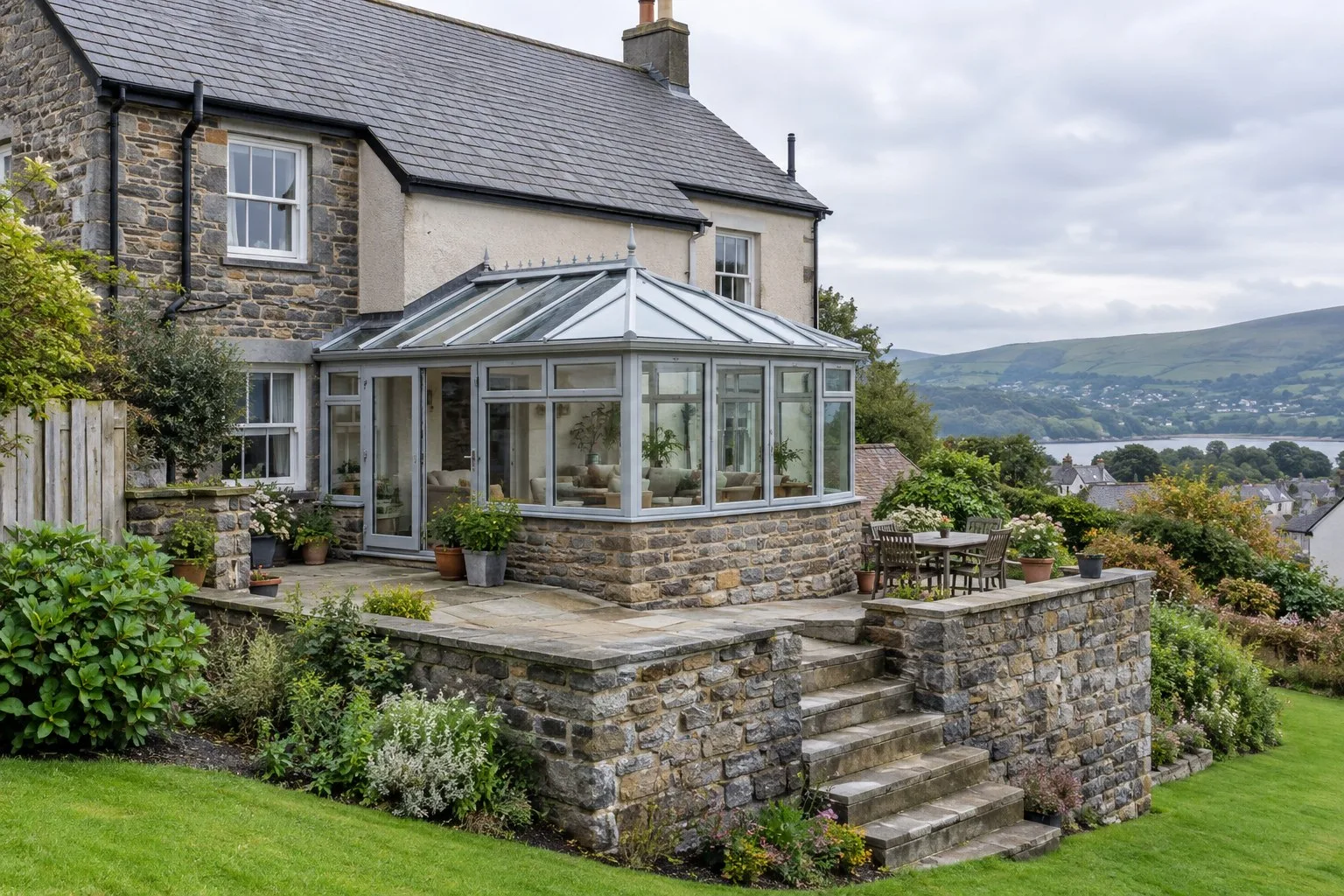
Conservatory planning permission in Wales works on permitted development, like England, but the Welsh Government sets its own limits. A conservatory on a house needs no planning application if it stays inside them. Go beyond them, or build somewhere that has lost its rights, and you need to apply to the council.
Conservatory planning permission in Wales: the limits
The Welsh Government’s conservatory guidance treats a conservatory as a single-storey extension. It counts as permitted development if all of these hold:
- It does not project beyond the principal elevation of the original house.
- Its depth and height are each no more than 4 metres.
- It is no higher than the eaves of the existing house.
- If it is within 2 metres of a boundary, the eaves are no higher than 3 metres.
- Everything you build around the original house covers no more than 50% of the land around it.
- A side conservatory is no wider than half the width of the original house.
“Original house” means the house as first built, or as it stood when the modern planning system began if it is older. Earlier extensions therefore use up part of your allowance.
Protected land
In conservation areas, National Parks, National Landscapes and World Heritage Sites, a side conservatory may project no more than 3 metres from the side of the house. It must also sit at least 1 metre behind the principal elevation. Wales has three National Parks, Eryri (Snowdonia), Bannau Brycheiniog (the Brecon Beacons) and Pembrokeshire Coast. Each is its own planning authority, so ask it directly.
When you need conservatory planning permission in Wales
You need planning permission if any of these apply:
- A listed building. A conservatory is not permitted development within the grounds of a listed building. You may need listed building consent as well.
- Removed rights. A planning condition on your house or an Article 4 direction can take the rights away. Article 4 directions are most common in conservation areas, and the council’s planning register shows them.
- A flat, maisonette or other building. The householder rights cover houses only.
- A larger extension. If you need more depth or height than the limits allow, a householder application is the route.
Large developments may also be liable for the Community Infrastructure Levy, so check if you are building something big.
How Wales differs from England
The Planning Portal’s conservatory guidance covers England and says that policy in Wales may differ. The practical gap is that England has a larger home extension scheme for deeper rear extensions. The Welsh Government’s conservatory page does not mention one. Treat the limits above as the ceiling in Wales unless your council says otherwise. Compare them with our guide to conservatory planning permission in England.
Building Regulations in Wales
Planning permission and Building Regulations are separate in Wales, as everywhere else. The Building Regulations exemption for a small ground-level conservatory applies in England and Wales. Wales publishes its own technical guidance, though, and it has moved apart from England’s, particularly on energy efficiency. Ask your local authority’s building control team what applies to your plans. Our overview of planning and building a conservatory explains how the checks fit together.
Steep sites and conservatory planning permission in Wales
Many Welsh houses sit on slopes or in terraces, so the usual limits have a second effect: groundworks and access cost more. A lean-to conservatory is often the only shape that fits a valley terrace. A sloping site adds to the base, so ask for the groundworks to be priced separately. When you have a design, compare quotes from installers who work in your area and who know how the local council handles applications.
Get quotes for your home
A guide price only takes you so far. Local firms can price the work on your own home, and comparing a few quotes is the quickest way to see what is reasonable.
Compare free quotes